



.png)


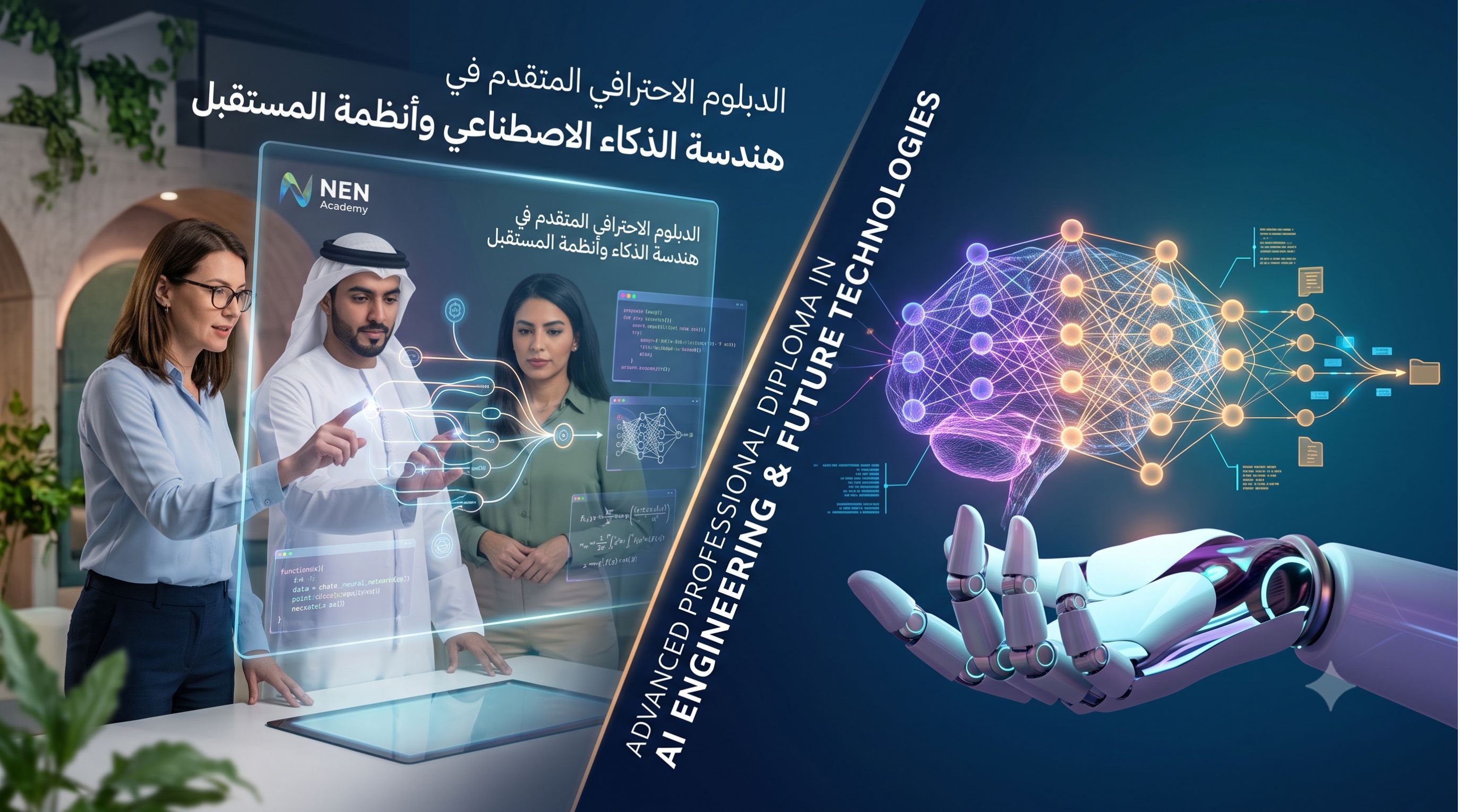
الدبلوم الاحترافي المتقدم في هندسة الذكاء الاصطناعي

Instructor
About This Course
انطلق في رحلة تحول احترافية متكاملة تغطي كافة جوانب الذكاء الاصطناعي من الصفر وحتى الإنتاج المتقدم والابتكار البحثي. يتوزع المحتوى الهيكلي للدبلومة على النحو التالي:
العام الأول (التأسيس والمهارات الجوهرية): تمكين الطالب من الأدوات الرياضية والإحصائية وبناء البرمجيات الذكية باستخدام بايثون ومكتباتها الشهيرة (NumPy & Pandas)، مع سبر أغوار التعلم الآلي والعميق (CNNs, RNNs, Transformers)، وإدارة البيانات الضخمة (Hadoop, Spark)، صعوداً إلى أخلاقيات وحوكمة الذكاء الاصطناعي.
العام الثاني (المواضيع المتقدمة والإنتاج): الانتقال إلى التخصص الدقيق في الرؤية الحاسوبية والتعلم المعزز، بالإضافة إلى الجانب الأكثر طلباً في سوق العمل وهو هندسة الممارسات (MLOps) ونشر الأنظمة عبر السحابة. يتيح هذا العام أيضاً مسارات اختيارية (كـ الروبوتات، التمويل، أو الرعاية الصحية).
المرحلة النهائية والتطبيق العملي: يختتم البرنامج برأس المال المعرفي عبر مشروع التخرج التطبيقي أو الرسالة، ومواكبة أحدث الأوراق البحثية، مع إتاحة الفرصة للتدريب العملي في الشركات والمختبرات الصناعية.
إدارة التدريب
Curriculum Overview
This course includes 1 modules, 5 lessons, and 5:00 hours of materials.
This course provides the mathematical foundations required for advanced study in Artificial Intelligence. It covers linear algebra (vectors, matrices, eigenvalues), probability theory, statistics, and optimization techniques. Emphasis is placed on applying mathematical concepts to machine learning algorithms, including gradient-based optimization and probabilistic modeling.
This course develops advanced programming skills using Python for AI applications. Topics include data structures, object-oriented programming, and scientific computing libraries such as NumPy and Pandas. Students learn to implement algorithms efficiently and build scalable data-driven applications.
This course introduces fundamental concepts of machine learning, including supervised and unsupervised learning. Topics include regression, classification, clustering, and model evaluation techniques. Students gain hands-on experience in building predictive models and understanding their performance.
This course focuses on data preprocessing, exploratory data analysis (EDA), and visualization techniques. Students learn how to clean, transform, and interpret data using tools such as Matplotlib and Seaborn, enabling effective communication of insights.
This course equips students with the skills necessary to conduct scientific research in computing. Topics include research design, academic writing, literature review, citation standards, and ethical considerations in research.
Course Certificate
Course Specifications
Subscribe to Newsletter


NEN Partner
ETS Official Website iTEP English Proficiency Test Tanalal Arabic Proficiency Test Skills for English Language Tests LanguageCert – Language Certifications & Exams Microsoft Cisco AcademyImportant Links
National Education Network ETS Test Booking Service ICPU Skills Assessment Certificate BSkills – Skills & Development Platform Certified Trainer Program Microsoft Technology Associate (MTA) IPSD ProgramContact


Reply to Comment